
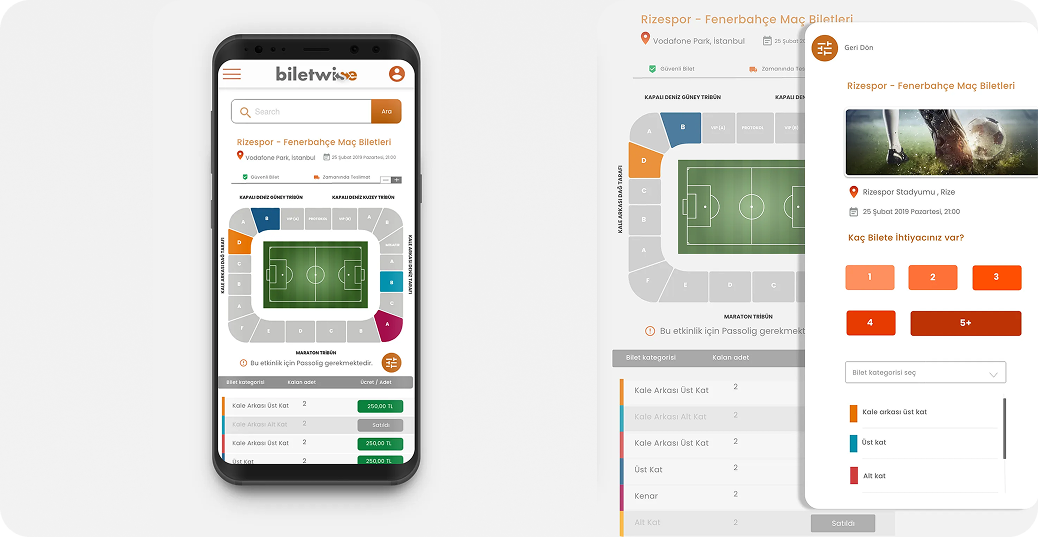
Second-Hand Ticket Trading in Global B2C Marketplaces: Seamless Booking Experience
Introduction
Secondary marketplaces operating specifically for sports, concerts, and event tickets target a segment with high intent but low tolerance in terms of user behavior. Users usually come to the platform with the expectation of "now and fast"; therefore, even the slightest friction in the purchasing process can lead to high abandonment rates.
This article discusses service and product design approaches that optimize the purchase funnel, strengthen the perception of trust, and streamline the booking process in a B2C second-hand ticket marketplace serving on a global scale.
User Intent and Behavior Model
The main characteristics of users buying second-hand tickets are:
- Time Sensitivity: Decision-making and transaction time are limited.
- Price Comparison: Users tend to find the best offer.
- Trust Expectation: Verification is critical due to the fear of fake tickets.
- Low Tolerance: Long forms and complex steps cause immediate exit.
Therefore, the designed experience is shaped around quick decision-making behavior, not "discovery".
Re-engineering the Purchase Funnel
1. Search and Event Detail Page
The user journey usually starts with a specific event search. At this stage:
- Event name, location, and date are presented clearly.
- "Secure ticket" and verification statements are positioned in the most visible area.
- Unnecessary content is filtered out, directing attention solely to the ticket selection process.
Goal: To answer the question "Am I in the right place?" in the user's mind within the first seconds.
2. Seat and Category Selection
Visualization is at the forefront of interface design:
- Stadium/Venue Map: SVG-based interactive maps.
- Color Codes: Differentiation of category and price with colors.
- Real-Time Availability: Sold seats dropping instantly.
Gains of this approach:
- Increased spatial awareness of the user.
- Reduction in wrong category selection.
- Shortening of decision-making time.
3. Quantity Selection and Reservation Flow
Against the "insufficient stock" problem frequently encountered in second-hand ticket markets:
- Selectable quantities are presented clearly and limitedly.
- "Reserved" or "sold" statuses are updated instantly.
- Micro-feedback is given to the user, creating a sense of time pressure but not panic.
4. Managing Trust and Risk Perception
The biggest reason for abandonment rates is insecurity. Throughout the experience, the following elements are repeated:
- Seller verification badges.
- The platform's 100% ticket guarantee.
- Clear return and cancellation conditions.
This approach gives the user the feeling of "I am making a controlled transaction", not "I am taking a risk".
Service Design Perspective
This product is treated not just as an interface, but as a service managing the tripartite relationship between seller, buyer, and platform.
- Invisible Operation: Automating ticket transfer flows (PDF, Mobile Transfer, etc.) from seller to buyer.
- Stock Locking: Closing the ticket to others while a user is at the payment step.
- Edge-Case Management: Directing the user without breaking the flow in cases such as payment failure or timeout.
Technical Architecture and Performance-Oriented Tech Stack
In second-hand ticket platforms operating on a global scale, technical infrastructure directly affects conversion rates.
Example Technical Approach
-
Frontend
- React / React Native: High-performance interface.
- Map Render: Canvas or SVG-based, zoomable seat maps.
- Optimistic UI: Instant reaction to user actions.
-
Backend
- Node.js / Java: For high-traffic I/O operations.
- Socket.io / WebSockets: Real-time stock management.
- Event-driven Architecture: Asynchronous management of order and transfer processes.
-
Data and Performance
- Redis: Temporary reservation locks (with TTL).
- CDN: Fast distribution of static content (event images).
- Monitoring: Instant error tracking and performance monitoring.
Conclusion
Second-hand ticket buying and selling is an area with high commercial potential but extremely fragile in terms of experience. Success is possible not with aggressive sales tactics, but by designing a fluid, reassuring, and frictionless purchase funnel.
The approach discussed in this study aims to offer a modern marketplace experience that facilitates decision-making rather than challenging the user.